Mold Removal St. Louis: City Rental Law ($1,223 to $3,757 Nationally)
Mold removal in St. Louis usually costs $1,223 to $3,757, the national range HomeAdvisor published in 2026 (average $2,368), since no publisher lists a St. Louis-only price.
Since Dec 30, 2024, City Ordinance 71946 requires owners to prevent and remediate mold in rental units.
Key numbers
- Average $2,368Mold remediation, nationalHomeAdvisor, Jun 2026
- Average $2,300Mold remediation, nationalThis Old House, Mar 2026
- $10 to $25Per square foot, nationalHomeAdvisor, Jun 2026
Know what the system needs? Call the line for the job: solar repair, new equipment, or roof work.
| Job or rate | Published cost | Source |
|---|---|---|
| Mold remediation, national | Average $2,368; most $1,223 to $3,757 | HomeAdvisor, Jun 2026 |
| Mold remediation, national | Average $2,300; most $1,200 to $3,750 | This Old House, Mar 2026 |
| Per square foot, national | $10 to $25 | HomeAdvisor, Jun 2026 |
| Basement, national | $500 to $3,000 | HomeAdvisor, Jun 2026 |
| Attic, national | $1,000 to $4,000 | HomeAdvisor, Jun 2026 |
| Crawl space, national | $500 to $2,000 | HomeAdvisor, Jun 2026 |
| Mold testing, national | Basic $250 to $350; with lab analysis $450 to $800 | HomeAdvisor, Jun 2026 |
We found no St. Louis-only mold removal price, so every row is a national figure.
What makes mold removal cost more or less in St. Louis?
The water source and the square footage set the price, and in St. Louis the source is often a basement or a sewer lateral.
- A sewer lateral repair. MSD says the whole lateral is private property, so a backup from a cracked or root-filled line adds a plumbing bill the owner pays.
- Square feet removed. The EPA puts the homeowner line at about 10 square feet, and every square foot past it is crew time and torn-out material.
- Ducts. The EPA lists the inside of ductwork among hidden mold spots and says not to run the furnace or AC if the ducts may be moldy.
- Testing. HomeAdvisor puts basic testing at $250 to $350, which the EPA says is usually unnecessary when you can see the mold.
- A rental inspection. Ordinance 71946 bars a Certificate of Inspection while mold is present, and the City says fees may apply for some inspections.
Mold spreading in a St. Louis basement or after a leak? Call the mold line and say how big the area is and what got wet.
Is it urgent? When St. Louis mold needs a pro now
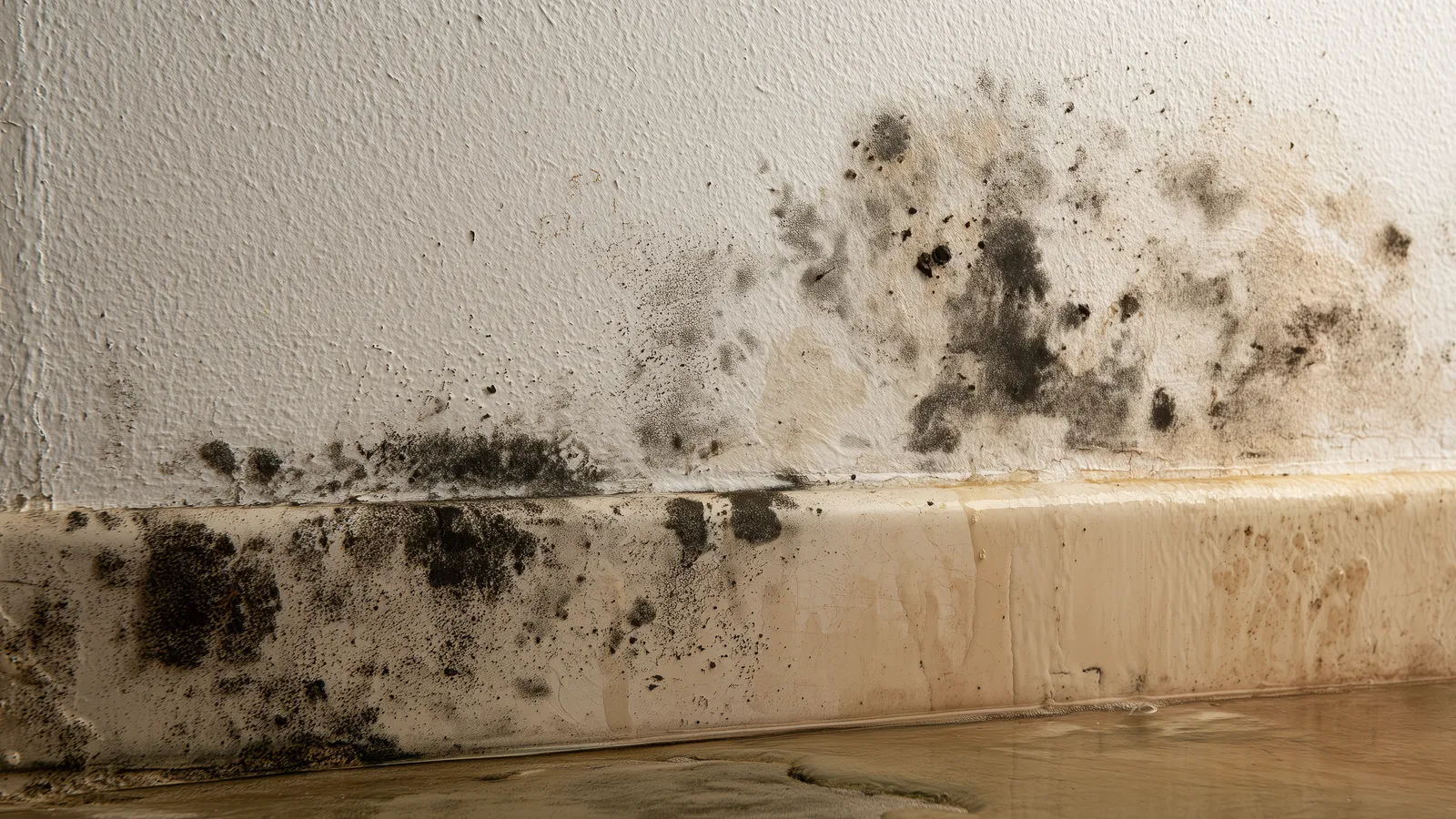
Mold is urgent when it covers more than about 10 square feet, follows sewage or flood water, or sits in the ductwork. It is also urgent when someone in the house has asthma or a weak immune system. The CDC says people with asthma or mold allergies may have severe reactions and immune-compromised people can get lung infections. A small spot on a bathroom ceiling can wait for a scheduled visit. If the mold came from a leak or backup that is still wet, call for drying first; EPA says to dry materials within 24 to 48 hours. See water damage restoration in St. Louis.
Does St. Louis have a rental mold law?
Yes: Ordinance 71946, "Prevent and Remediate Mold," approved Dec 30, 2024, puts mold on the owner in rental housing. It requires owners to prevent and remediate mold in rental dwelling units, bars a rental unit from getting a Certificate of Inspection while mold is present, and requires owners to notify tenants of units where mold is found. That makes mold removal part of getting a St. Louis rental through inspection, not an optional cleanup.
To ask the City to look, request an interior residential property inspection through the Citizens Service Bureau online form or at 314-622-4800. The City says fees may apply for some inspections.
Where does St. Louis mold come from?
From water: a leak, a sewer backup or a damp basement. EPA says wet materials dried within 24 to 48 hours usually do not grow mold, so fixing that source is the real job. The Metropolitan St. Louis Sewer District (MSD) says the whole sewer lateral is private property, so a backup from a cracked or root-filled lateral is the owner's to fix; MSD takes backup calls at 314-768-6260. The housing stock is old: the Census Bureau's 2020 to 2024 survey puts the median year built at 1939 or earlier, with 57.9% of units built in 1939 or earlier. EPA lists hidden mold spots including the back of drywall, inside walls around pipes and inside ductwork. Fix the source with a St. Louis plumber before the remediation crew closes anything up.
Do you need mold testing?
Usually not when you can see it. EPA says sampling is usually unnecessary when visible mold is present and that no federal limits exist for mold or spores, and the CDC does not recommend mold testing. Testing helps when you smell mold but cannot find it, or to show a cleanup worked; HomeAdvisor puts basic testing at $250 to $350. More on mold inspection.
| What | St. Louis | Source |
|---|---|---|
| Rental mold law | Ordinance 71946 (Dec 30, 2024): owners must prevent and remediate mold; no Certificate of Inspection while mold is present | City of St. Louis |
| Inspection request | Citizens Service Bureau, 314-622-4800; fees may apply | City of St. Louis |
| Sewer backups | MSD 314-768-6260; lateral is private property | MSD |
| Repair help | Healthy Home Repair (health and safety repairs), 314-657-3888 | City of St. Louis CDA |
| Housing age | Median built 1939 or earlier | U.S. Census Bureau, ACS 2020 to 2024 |
Local rules, programs and climate for St. Louis, from the official city, utility, state, Census and NOAA pages listed under Sources.
Questions to ask a St. Louis mold removal company
- What caused the mold, and who will fix the source?
- How many square feet will you remove, and will you contain the area while you work?
- Will you follow recognized remediation guidelines, as EPA advises? Ask for references from past mold jobs.
- If this is a rental, will your paperwork help the unit pass the City's inspection?
- Can I see proof of insurance and a written price before work starts?
Mold back after you cleaned it, or larger than a doormat? Call the mold line and ask for a written scope before work starts.
Do this now: mold in a St. Louis home
- Find and stop the water first. A leak, a backup or a wet basement will bring mold back after any cleanup.
- If it covers less than about 10 square feet, EPA says a homeowner can generally handle the cleanup. Bigger areas, or a lot of water damage, call for a professional.
- Do not run the furnace or AC if you think the ducts are moldy, EPA says.
- Never mix bleach with ammonia or other cleaners, the CDC warns.
- Renting? Tell the owner in writing. St. Louis Ordinance 71946 requires owners to prevent and remediate mold in rental units.
- If a claim is possible, photograph it before cleanup and call your insurer. Do not sign a contract that hands your claim to a contractor.
Mold removal in St. Louis is cleaning up or removing moldy materials and fixing the moisture that caused them. HomeAdvisor's 2026 national average is $2,368, with most jobs $1,223 to $3,757.
More St. Louis guides
Leaks and sewer laterals: plumber in St. Louis. Flooded basement: water damage restoration in St. Louis. Damp ducts or a furnace drain: HVAC repair in St. Louis. Compare mold removal in Kansas City and mold removal in Indianapolis, or read the national mold remediation guide. Calls go to an independent company that serves your area and takes this kind of job (how calls work).
More help in St. Louis
Mold removal in other cities
Before you hire: the license check, the questions to ask and the red flags are in how to choose a mold remediation company.
Questions people ask
How much does mold removal cost in St. Louis?
We found no St. Louis-only price. HomeAdvisor's 2026 national average is $2,368, with most jobs $1,223 to $3,757, and This Old House puts it at $1,200 to $3,750.
Does St. Louis have a mold law?
Yes, for rentals. Ordinance 71946 (Dec 30, 2024) requires owners to prevent and remediate mold in rental units, bars a Certificate of Inspection while mold is present, and requires notice to tenants.
How do I get the City to inspect mold in my rental?
Request an interior residential property inspection through the Citizens Service Bureau online or at 314-622-4800. The City says fees may apply.
Can I remove mold myself?
EPA says a homeowner can generally clean an area under about 10 square feet. Bigger areas or a lot of water damage call for a professional, and never mix bleach with ammonia.
Do I need a mold test?
Usually not if you can see it. EPA says sampling is usually unnecessary when mold is visible, and the CDC does not recommend testing. Basic testing costs $250 to $350, HomeAdvisor says.
Mold in a St. Louis basement, bathroom or rental unit? Call the line and ask the company to fix the moisture source in the same visit.
- 1Call the line
- 2It rings a local company
- 3They give you the price
Before you book
- License numberAsk for it, then check it with the state board.
- Written priceGet the visit fee and the job price in writing before work starts.
- Proof of insuranceAsk for the certificate, especially for roof, tree and electrical work.
Sources (11)
- HomeAdvisor: Mold remediation cost (2026-06-19)
- This Old House: Mold remediation cost (2026-03-11)
- City of St. Louis: Ordinance 71946, Prevent and Remediate Mold (2024-12-30)
- City of St. Louis: Request a residential property inspection, interior (checked 2026-10-11)
- MSD Project Clear: Sewer backups (checked 2026-10-11)
- City of St. Louis Community Development Administration: Home repair (checked 2026-10-11)
- U.S. Census Bureau: ACS 2020 to 2024, Table B25035 Median year structure built, St. Louis city (checked 2026-10-11)
- U.S. Census Bureau: ACS 2020 to 2024, Table B25034 Year structure built, St. Louis city (checked 2026-10-11)
- EPA: Mold cleanup in your home (2026-06-04)
- EPA: A brief guide to mold, moisture and your home (2026-02-18)
- CDC: About mold and your health (2024-09-26)
Call the mold line in St. Louis
Have the address, where the water came from if you know, how long it has been wet and which rooms are affected. Take photos first. The company will quote its inspection fee before anything is booked.
Free call to an independent company in your area that takes this kind of work.